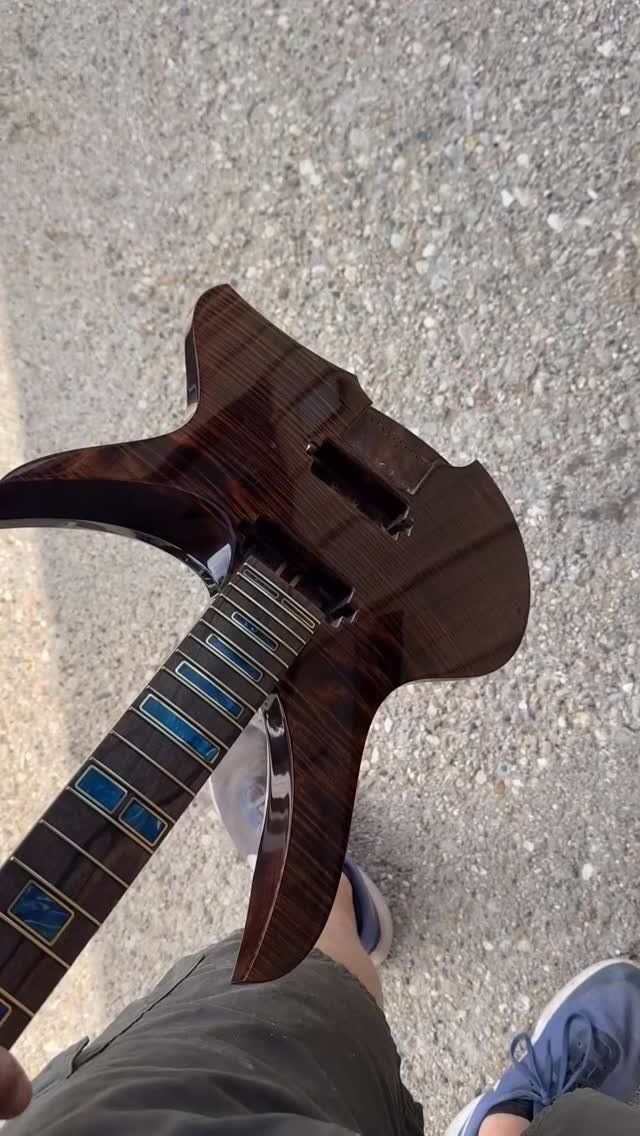
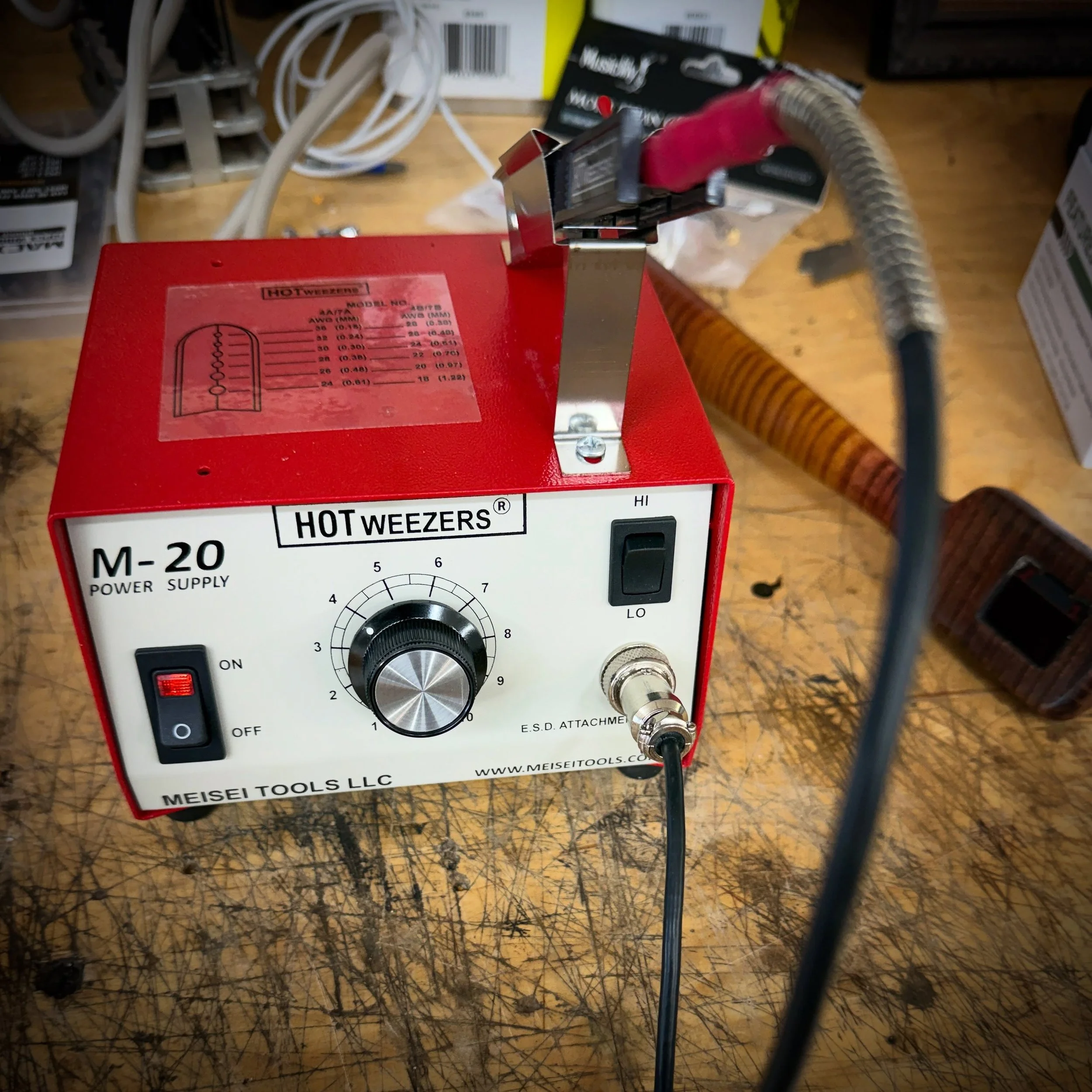
Welcome to Bezard Guitars
About Will Bezard
I came to lutherie at a point in my life when I badly needed a direction. I had loved guitars and played music from a young age, but I had no clear idea what I was going to do with my life. I was working for minimum wage, doing poorly in community college, and eventually discovered that building guitars was something people actually did for a living. I became obsessed with the idea, saved what I could, and in 2015 attended the Galloup School of Lutherie.
Galloup gave structure to something that had previously been almost entirely instinctive. I learned guitar making alongside repair, setup, acoustic voicing, woodworking, fretwork, finishing, and the countless small disciplines that make an instrument function as a whole. More importantly, I learned to approach the work methodically. A guitar is a system. Structure, materials, geometry, mass, stiffness, hardware, electronics and setup interact with one another, and decisions made in one part of the instrument inevitably affect another.
Shortly after graduating, I moved to California and went to work for Rick Turner. I spent six years in Rick’s shop and eventually became his foreman and production lead. During that time I worked through virtually every part of the process: lumber preparation, construction, finishing, CAD, CNC machining, design, production management and final assembly. I built and finished a tremendous number of Model 1 and Renaissance instruments and had the privilege of learning directly from Rick as my mentor. He also gave me the freedom to experiment, solve problems and become increasingly involved with the technical side of the shop.
That experience permanently changed how I think about making guitars. Building an excellent instrument once is different from understanding a process well enough to produce excellent results repeatedly. Production teaches you to identify variables, eliminate unnecessary inconsistency and distinguish meaningful craftsmanship from ritual. Repair teaches another lesson: every design decision eventually has to live in the real world. Instruments experience humidity, heat, string tension, accidents, wear and decades of use. I want what I make to survive that reality and remain understandable and serviceable to the person who eventually has to work on it.
After six years with Rick, I returned to Galloup, this time as an instructor. Today I am the Lead Electric Guitar Instructor at the Galloup School of Lutherie, where much of my work centers on electric-guitar construction, design and CAD/CAM. Teaching has forced me to understand my own processes at a deeper level. It is difficult to hide behind intuition when you have to explain why something works, demonstrate it, measure the result and help somebody else reproduce it.
That same mentality has increasingly shaped my own work. I have become deeply interested in measurement, material properties, resonance, pickup behavior, fret and scale geometry, and tools that allow luthiers to quantify things traditionally discussed almost entirely through intuition. My involvement in projects such as the Acousonix Frequency Hammer grew naturally from that interest. I still value the accumulated knowledge of traditional lutherie enormously, but I do not believe tradition and technology are opposing ideas. I will use hand tools, CNC machines, software, measurement equipment or any other method that gives me greater control over the finished instrument. The method is not the accomplishment. The guitar is.
I think about weight and stiffness because they influence how the instrument stores and releases energy. I think about neck stability, structural reinforcement, finish chemistry, environmental resistance and future repairability because a guitar should feel alive and responsive while remaining a durable professional tool. I want to understand why I am making a decision rather than inherit an explanation for it.
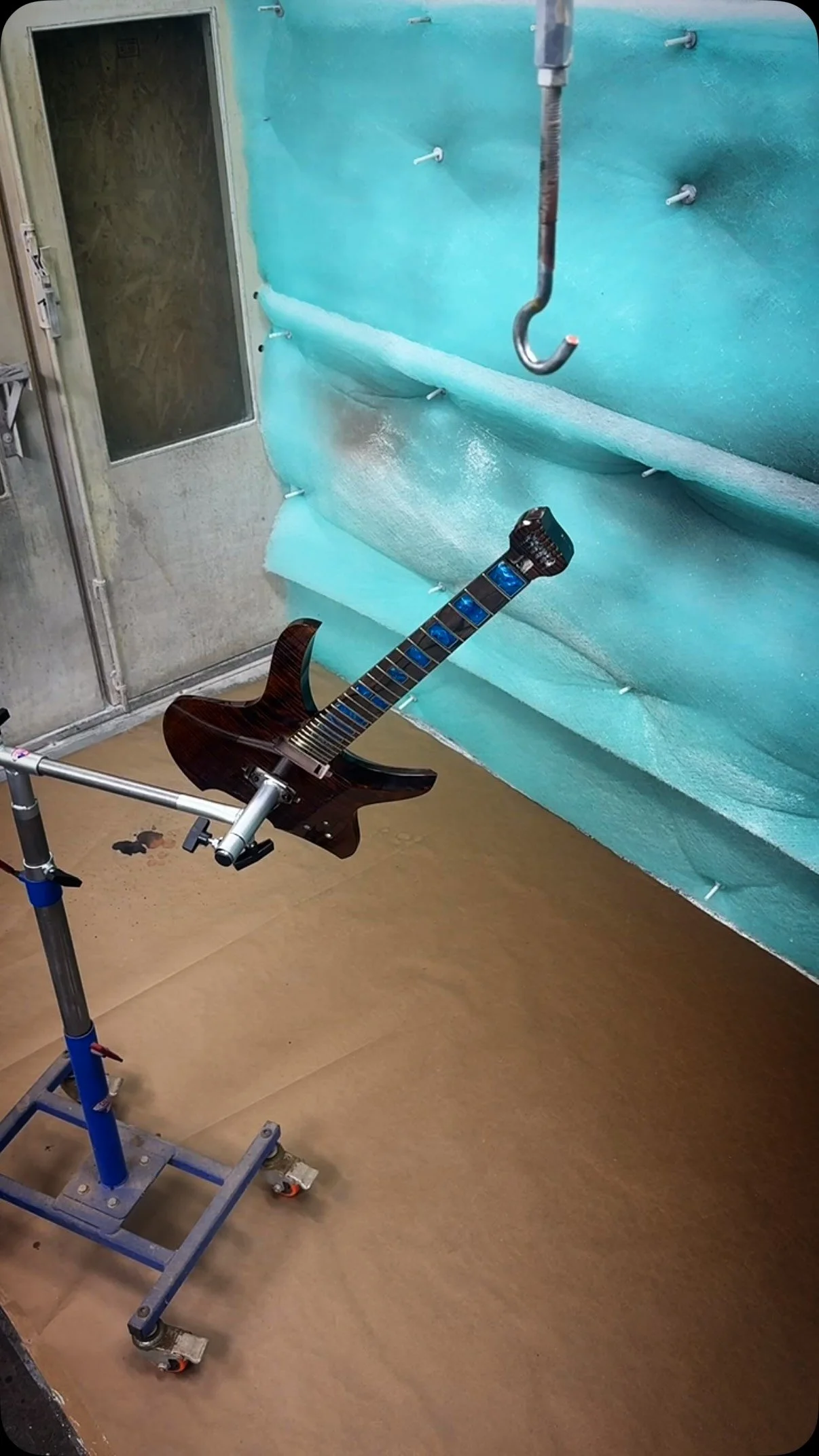
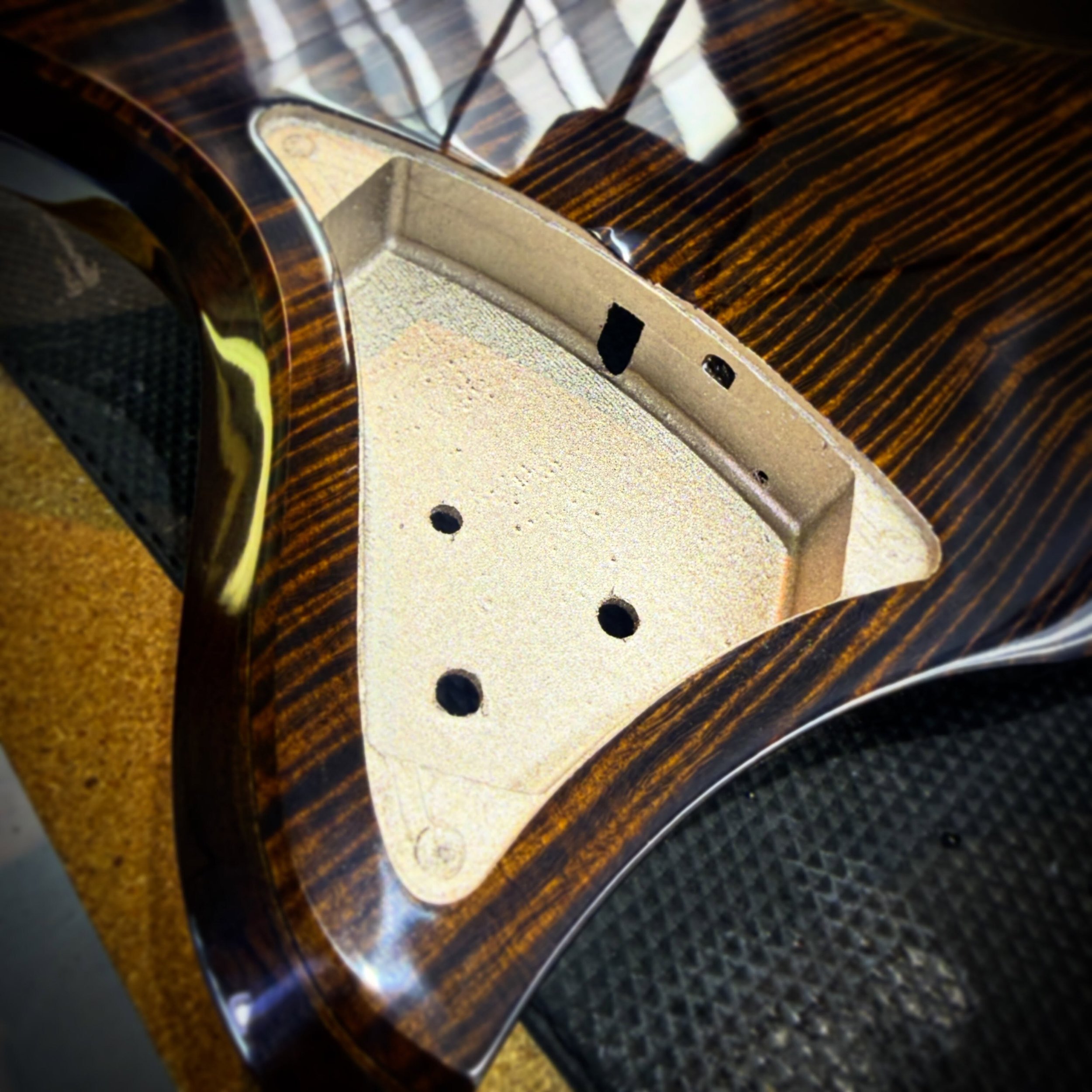
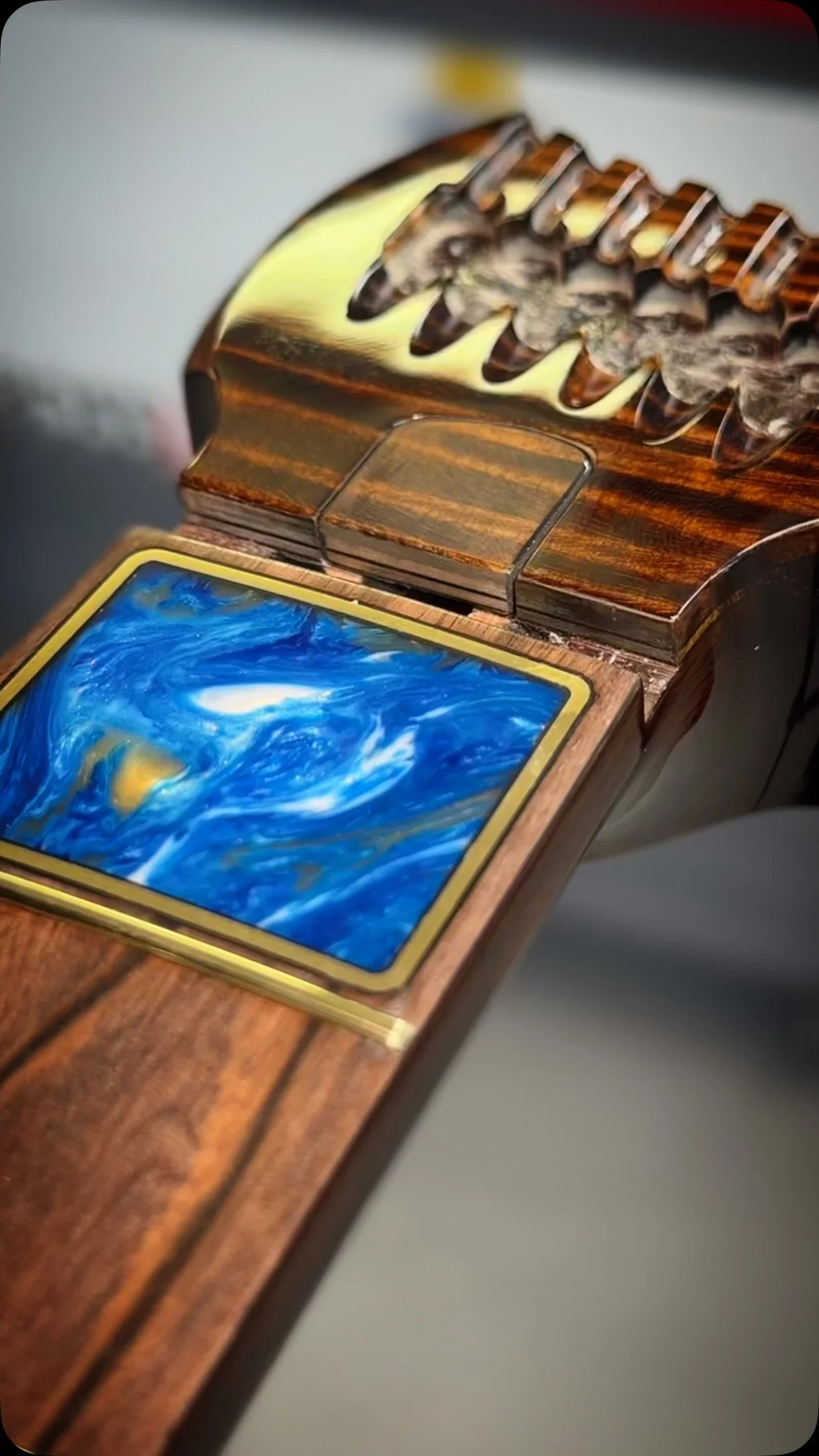
Bezard Guitars is where those experiences converge: traditional woodworking, acoustic voicing, production discipline, repair pragmatism, modern manufacturing, engineering, progressive electric-guitar design and empirical measurement. I am interested in what happens when those things are allowed to coexist without treating any one of them as an ideology.
The next stage of Bezard Guitars takes that idea further. I am moving away from commissioned instruments and the assumption that a guitar should begin with a list of customer requests. Instead, I want to make the instruments I believe must exist. That allows every decision—from scale length and construction to materials, weight, resonance, hardware, color and ornamentation—to serve one complete idea rather than a collection of preferences.
I don’t expect every guitar I make to appeal to every player. I would rather make fewer instruments, pursue ideas much further, and allow each guitar to have a reason for being exactly what it is.
I’m not trying to make a guitar for everyone. I’m trying to make one guitar completely.
— Will Bezard